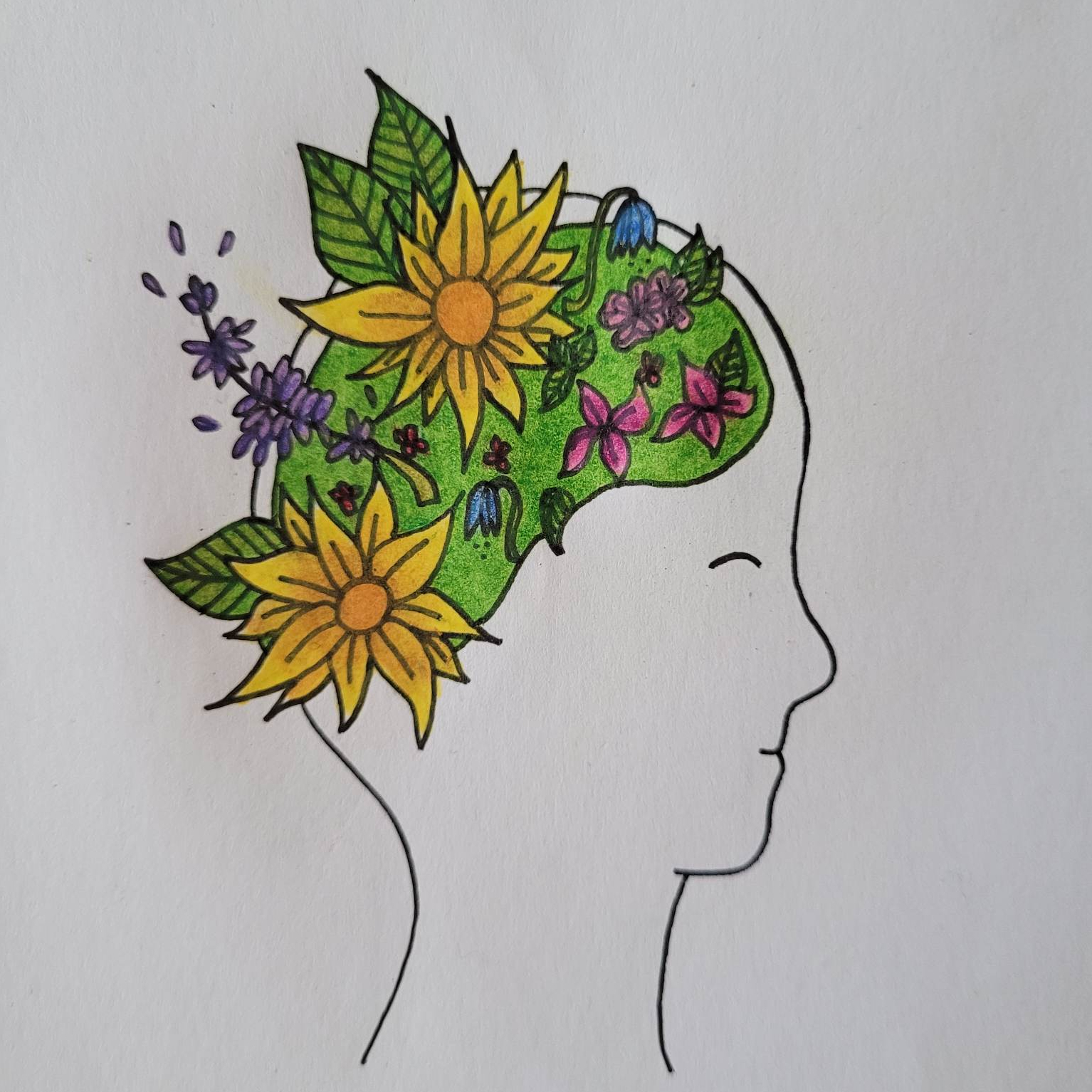
If I were to describe my own autism without using the diagnostic criteria, I would say that it’s like living as a mind-being. My autistic experience is primarily feeling that there is a barrier between the physical world and the mind world. I live in the mind world. The physical world can be reached, but with significant effort on my part. My natural state is living in my own head. For me this is both a challenge and a gift.
The Māori indigenous people in New Zealand have their own word for autism that they call Takiwātanga, which means in their own time and space. This resonates with me. My life is lived from a different perception of time and space which is rooted in my inner world. The rhythm of society therefore feels off beat in comparison with my own life rhythm. I can adapt to a certain degree, but it costs me. I’ve learned that the key is to find a balance.
Autism or Autism Spectrum Disorder (ASD) is categorized as a neurodevelopmental disorder. This means that the brain and the central nervous system has developed in an atypical way. It is not a disease and it is not an injury. I also wish to argue that it isn’t an error, but a part of the world’s natural neurodiversity. Autism is a neurotype that you’re either born with or that develops during early childhood. However, this doesn’t mean that every Autistic person is diagnosed early (or even at all).
It is important for me to emphasize that there are both visibly (in terms of behavior) Autistic people and masked Autistic people. The masked Autistics (like me) hide their traits and needs either consciously or unconsciously which unfortunately is detrimental to their mental health. To those who are interested in learning more about this I recommend reading the book “Unmasking Autism” by Dr. Devon Price. Furthermore, there are no physical autism traits in terms of appearance.
The official diagnostic criteria can be found in the ICD-11 and the DSM-5. ICD-11 (International Classification of Diseases) is the international standard for the documentation of diseases. (It’s actually quite weird that autism is mentioned here considering the fact that it’s not a disease). It’s published by the World Health Organization (WHO) and ICD-11 is the newest model. The DSM-5 (Diagnostic and Statistical Manual of Mental Disorders) is the model that is used in the US. In Europe the ICD-11 is the standard. However, despite having been approved by WHO in 2019 it has yet to be applied in Norway. This is unfortunate considering that the ICD-10 is outdated, something I will write more about in my next post.
According to ICD-11 there are two main criteria for an autism diagnosis. These are 1) challenges with communication and social interaction and 2) restrictive and repetitive routines and interests. How this is experienced and observed varies between every Autistic person. Everyone with the diagnosis has these two traits in common, but we are each our own unique variation of ASD.
The ICD-11 has different autism diagnosis combinations. This is evaluated based on whether you A) also have an intellectual developmental disorder and/or B) are non-verbal (i.e., non-speaking), partially verbal or have mild/no difficulties with verbal communication. I would therefore be categorized as an Autistic person without an intellectual developmental disorder who has small/no difficulties with verbal communication. This does not, however, signify that I have few challenges.
Communication and social interaction
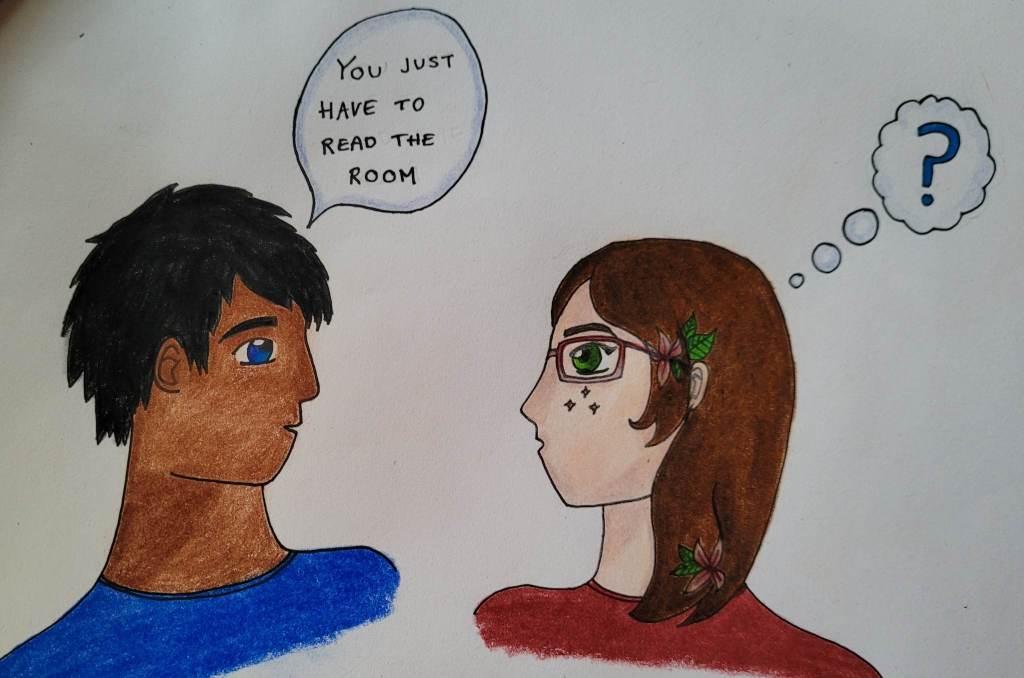
This first diagnostic criterium has to do with communication and social interaction. The first part is about challenges with verbal and/or non-verbal communication. For me this does not mean that I have trouble with language. My challenges have to do with reading and understanding body language, knowing what topics are appropriate in different contexts, starting, maintaining and ending a conversation, reading between the lines, participating in small talk, focusing on conversations with many rapid changes in topic, being in group conversations, literal interpretation etc. To sum it up I could say that I can understand text, but not subtext.
In addition, I also have something called situational mutism (often referred to as selective mutism). For me this doesn’t mean that I choose not to speak, but that I can literally lose my voice in situations where I feel a lot of stress. I’m not going to write more about this topic now, but I will write a separate post about it later.
When it comes to social interaction, I can explain my challenges in this area by saying that I lack social intuition. Lina Liman (who is also Autistic) states in her book “Konsten att fejka arabiska: en berättelse om autism” (The art of faking Arabic: a story about autism) that she understands this as a lack of social autopilot. The reason why I choose to call it social intuition is because we can learn social skills, just not intuitively. We need to learn these skills through a logical approach. You can’t just expect an Autistic child to play with other children and intuitively learn unspoken social rules. It’s especially important that parents and teachers understand this.
My challenges in this area have to do with several issues. Firstly, it is difficult to focus my attention out of my own mind so that I can focus on other people and what they’re saying. Secondly, it’s challenging to try to understand other people’s perspective, thoughts and intentions. I need to consciously process what other people understand intuitively and spontaneously.
However, the fact that I don’t have this kind of intuition does not mean that I can’t work on gaining more understanding in other ways, namely by processing it consciously. I read a lot of fiction which is brilliant since it has helped me to gain more knowledge about other people, different personality types and motivations. Therefore, I now have a much better understanding of others than before. The fact that I don’t have a social intuition remains though. I have never had it and I never will. That’s ok. I have done “research” on human behavior and personality types, so I have found a logic-based approach to social skills instead.
Thirdly, these challenges lead to me having a low social battery and a big need for time for myself. This is both to rest and to take my time to process everything I’ve experienced and everything that’s been said. This low social battery mustn’t be confused with introversion though. I am an introverted Autistic, but there are also extroverted Autistics. It’s our challenges with communication and social interaction that causes us to generally have a low social battery.
Restrictive and repetitive routines and interests
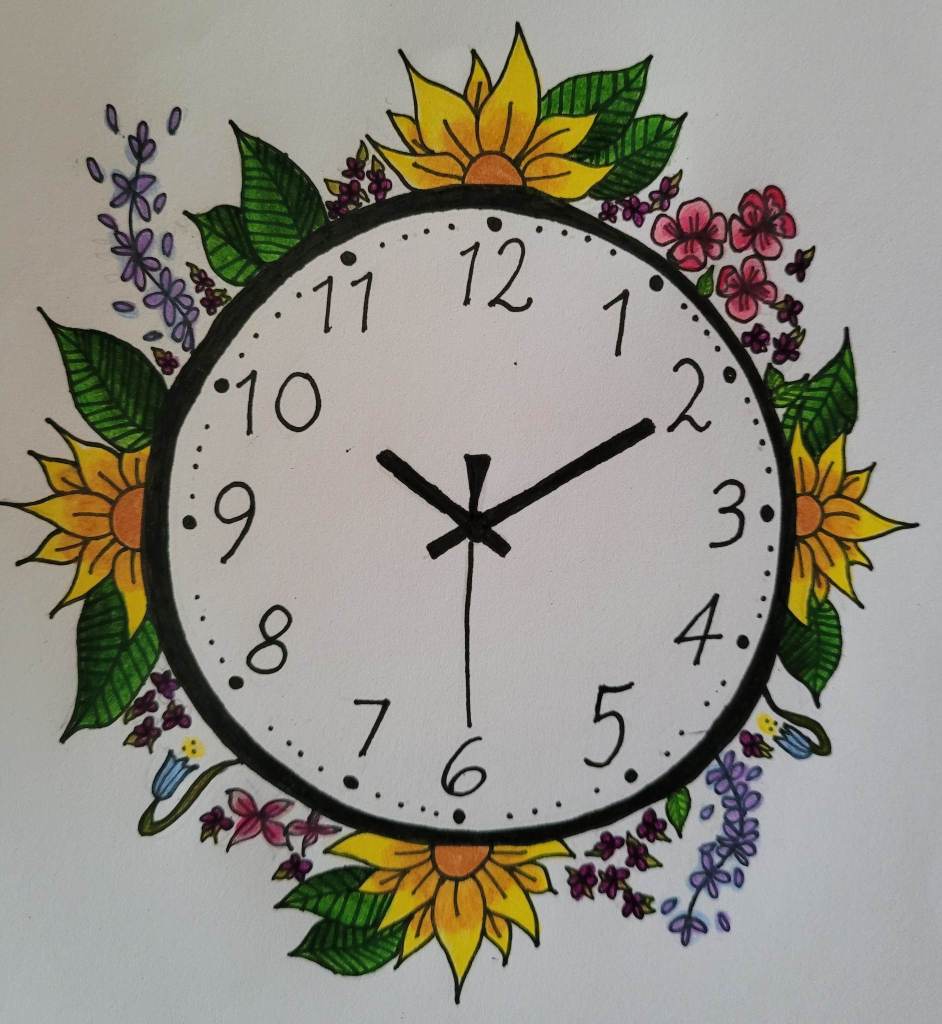
The other diagnostic criterium is also a very broad category. It encompasses restrictive and repetitive routines and interests. So, what does this mean? On one hand it signifies a need for routine and a difficulty with adapting to change (a sensitivity to unpredictability). The world feels especially chaotic for Autistic people, therefore the need for sameness is important to reduce stress. This is not the same as OCD (Obsessive Compulsive Disorder) by the way.
On the other hand, it signifies a habit of repetition. For me doing things the same way creates a feeling of safety. This can be always going the same way, listening to the same music and watching the same movies. The world is full of new impressions and this helps me limit that. The repetition aspect of this criterium also includes stimming, which I will write more about in a later post.
The second part of this criterium has to do with interests. Autistic people can have a strong interest in one or more topics or activities. Earlier the understanding was that it could only be a certain type of interests, such as a fascination with numbers, trains, computers etc., but this idea has changed. Now the understanding is that autistic special interests are defined by the intensity regardless of the topic. You can have a special interest in animals, space, gymnastics, a TV show etc.
I have special interests. These are fantasy, Latin America and (since my diagnosis) autism. Like I mentioned earlier, what makes these special interests is the intensity. I love exploring these topics! It’s like they give me a spark that makes me curious to learn more. This is something positive. The challenge is to dedicate time to other topics and activities since they are often of little to no interest.
Those are the diagnostic criteria. The neurotype can also have other traits (such as sensory sensitivity), but these are the ones that all Autistics have in common. ASD is a very broad diagnosis and it encompasses many different traits. I would say that every single Autistic person is their own unique version of it. I will write more on that in my next post which will be about the Autism Spectrum 😊
 Autism Diversity
Leave a comment