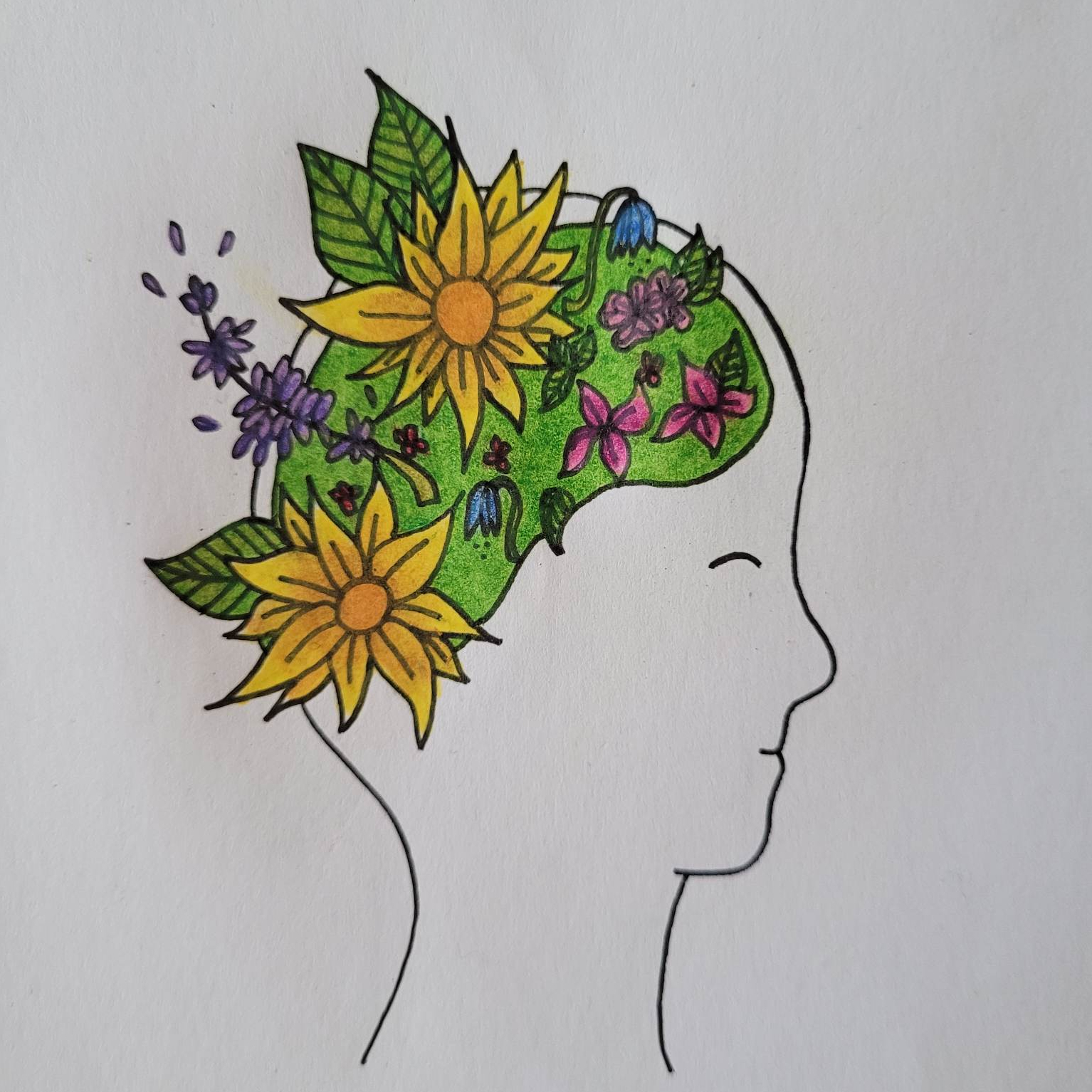
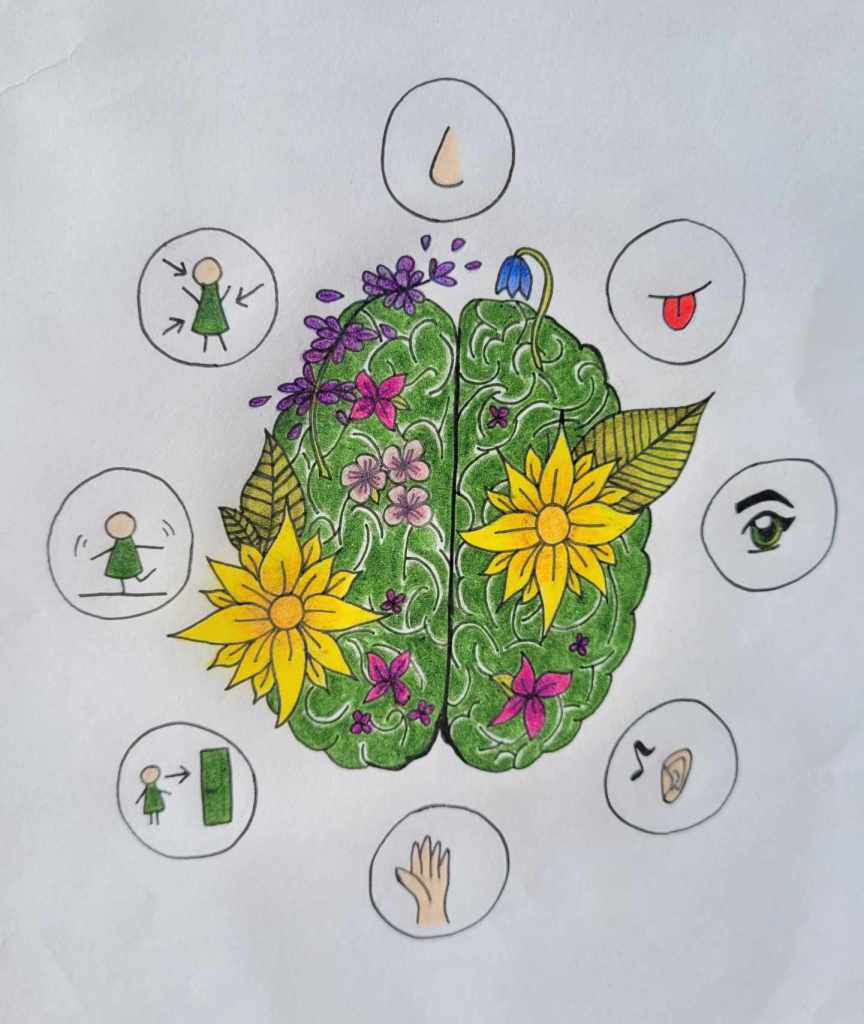
A word that has always been used to describe me is sensitive. I feel my emotions deeply, I’m sensitive to stress and I’m also sensitive to other people’s negative comments and behavior. This aspect of my sensitivity has always been clear to me, in both good ways and bad ways. However, another aspect of my sensitivity has been impossible for me to comprehend, an aspect I now know is called sensory sensitivity. It wasn’t until I got diagnosed as Autistic that I finally understood this part of myself.
Sensory sensitivity is the brain’s atypical interpretation of the sensory information picked up by our senses. This is called SPD (Sensory Processing Disorder) and is very common among Autistic and ADHD people. However, SPD can also occur on its own. In her book «Divergent Mind», Jenara Nerenberg explains that SPD mainly leads to the brain interpreting sensory information in either an overreactive way or in an under-responsive way. These two modes are commonly called hypersensitivity and hyposensitivity.
I have always been aware of the fact that I experience my surroundings in an overwhelming way. My parents knew it too, even if they couldn’t fathom why. The unfortunate outcome of this situation was that I was encouraged to think that “practice makes perfect” and therefore continuously confront my sensory sensitivities. I know now that it’s not possible to practice away SPD and that this approach can even make matters worse. The best thing you can do for yourself is to accommodate your own sensitivities in the best way possible. In addition, it might also be a good idea to apply for accommodations at school, higher education and work to avoid becoming overwhelmed. Often the smallest changes in our environment can help us feel a lot better.
SPD can affect the brain’s interpretation of one or several of our senses. A person who experiences this with one of their senses might have other senses where this isn’t the case. Traditionally we count five senses (hearing, sight, touch, taste and smell), but there are others as well. These are proprioseption (a sense that reacts to movements and the position of our body parts relative to one another), vestibular sense (a sense that interprets balance and spatial orientation), and interoseption (a sense that interprets the inner condition of our bodies, and tells us if we are hungry, tired or cold etc.).
For example, I have an auditory, visual and tactile hypersensitivity and a gustatory hyposensitivity. In my earlier blog posts, I have explained how every Autistic person is different. This is also true for our sensory profiles. I am going to give some examples of how SPD might appear in some of the senses. Afterward I will give some advice about ways to accommodate these sensitivities.
If you suspect that you might have SPD, I suggest listening to more people with sensory sensitivities who explain their experiences. The more examples you get the easier it will be for you to understand how SPD can be. It’s a good idea to write down your thoughts about your own sensitivities with examples, and thus start discovering your own sensory profile.
If you already know that you have SPD it can be a good idea to seek out an Occupational Therapist that specializes in sensory sensitivities, like Nerenberg describes in her book. An OT can help you figure out which impressions are triggering and which are calming. Then you can begin constructing your own sensory lifestyle. Nerenberg mentions that the STAR Institute in Colorado, USA specializes in this. Unfortunately, I haven’t heard of any OTs in Norway who work with this, but I hope that will change soon.
Hypersensitivity:
Hypersensitivity is an overreactive interpretation of sensory information that can lead to either discomfort, disgust or pain. It can also lead to a person being able to observe sensory information that most others can’t.
Hyposensitivity:
Hyposensitivity is an under-responsive interpretation of sensory information that can lead to missing this information or to a need for stronger sensory input (sensory seeking).
Hearing
Auditory hypersensitivity leads to a sensitivity to loud sounds and noises. This is my case. When I was little, I discovered that loud noises such as popping balloons were painful to me. I also discovered that loud music was uncomfortable. My instinct was to escape from the sound and I felt surprised when I noticed that others weren’t reacting the same way. I started bringing earplugs with me in case I would find myself in situations with loud noises.
Some Autistic people on the other hand are hyposensitive to sound and can feel right at home at a rock concert and often seek louder sounds. In my case I can go to a concert if I use good earplugs, but some sound levels are so loud that I have chosen to avoid them instead. Hypersensitivity can lead to a sensitivity towards loud sounds, but it can also lead to a sensitivity to certain types of sound. Sounds from speakers and electrical instruments are more difficult for me to listen to live, whereas classical music and concert band music is easier for me to enjoy.
Another aspect of this hypersensitivity is that one can hear sounds that most other people can’t. I think this is a positive side to my sensitivity because this means that I have very good hearing and because I find it fascinating to wonder about different sounds that I hear. For instance, I hear several electrical sounds in my home that I like to wonder about. Some Autistic people can actually hear electricity! This is a good example of how differences in our sensory profiles can lead us to perceive the world in different ways.
My best advice to protect yourself from loud noises is as mentioned, earplugs. The most effective ones are those that are custom made, but those are unfortunately quite expensive. Noise cancelling headphones are also a good protection against every day noise. The nice thing about these is that since it’s so common to use them to listen to music, no one will think that you are weird for wearing them.
However, the most important advice I can give is to not feel pressured to go to concerts, parties or other events with super loud music. The most important thing is to be considerate towards your own needs. This doesn’t mean that you can’t enjoy music. When I’m with my friends they are considerate and don’t turn the music up too much. It’s possible to enjoy great music even if the volume isn’t at max.
Sight
A visual hypersensitivity means that the eyes are sensitive to light. Most people use sunglasses when there’s bright sunlight and are therefore familiar with the stinging sensation bright light can provoke. A hypersensitivity to light is the same, only stronger. Instead of just bright sunlight, a person with this over-responsivity might also feel that fluorescent lights in lamps, car headlights and light effects are painful.
Fortunately, it’s quite easy to protect one’s eyes by using sunglasses. I personally prefer sunglasses with golden brown lenses that make my surroundings feel softer to look at. If you wear glasses then an option might be to change your lenses to ones that automatically turn a darker shade when exposed to UV light.
In your own home it might be a good idea to switch the lightbulbs with white light to ones with a softer yellow light. If the ceiling light is too bright you can opt to use several smaller lamps around the room to illuminate it instead. I prefer to avoid the color white in my furniture and on the walls because it’s such a bright color. If you feel the same way, but still want to use light colors I can recommend opting for warmer shades such as off-white, sand or beige. Some Autistic people can feel overwhelmed by strong bright colors. A softer color palette could then be a solution.
When it comes to light from computers, cell phones and tablets I have several tips. Firstly, I can recommend using screen glasses that protect the eyes against the strong screen light. Secondly, I can recommend switching the settings in your apps to night mode. This will give the apps a dark background instead of a white one. Finally, I can recommend going to settings on your computer and choose to use night mode all the time. This night mode doesn’t make the background dark, but it switches out the cold blue screen light for a softer golden one.
Touch
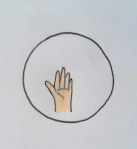
This sense encompasses more aspects than one might think. The skin comes into contact with many things such as clothes, materials, wind, temperature, rain etc. Many Autistic people feel uncomfortable with tags in their clothing and/ or with physical contact. Therefore, many choose to remove the tags from their clothes and prefer not to shake hands with or hug anyone. For some Autistics a light hug feels more uncomfortable than a tight hug.
It’s also possible to feel discomfort with certain fabrics and materials. Which are considered uncomfortable and which are considered comfortable varies with each individual. Some don’t like tight clothes and prefer to wear looser clothes in soft materials. I find materials such as metal, buttons, zippers and beads uncomfortable, but fabrics such as cotton, wool and viscose comfortable. When it comes to clothing, I have told my friends and family that it’s important that they understand this not because I expect them to dress according to my sensitivities, but because I want them to understand that I need to dress according to them.
Stress and factors like temperature can affect the level of sensitivity. The more stress a person with SPD feels, the more sensory issues they’ll experience and vice versa. Temperatures can also have an effect. Some might feel that heat is problematic, while others (like me), feel that cold and rain is more challenging. In my case I feel that my sensory sensitivities become worse on a rainy day and easier on a sunny day.
My advice on how to accommodate for tactile hypersensitivity is to choose to wear the clothes that are most comfortable for you. You can either buy clothes that are they way you prefer or you can go to a tailor to get clothing you already own altered. It’s also a good idea to identify which fabrics and materials are comfortable for you.
It’s a good idea to have furniture in materials you like. I prefer stone, wood, glass and ceramics. It’s important that your home is as comfortable as possible. It’s the place you should feel at ease and be able to recharge when you need it. Finally, I would recommend a thin pair of gloves for touching items you dislike, but can’t avoid. For instance, I use them to feel less discomfort when touching my keys.
Taste
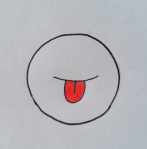
A gustatory hypersensitivity can lead to a feeling of disgust caused by strong tastes such as chili, pepper, garlic etc. Choosing foods with a milder taste can be a good solution in this case. I have an under-responsivity to taste so I actually prefer food with strong flavors and spices. Milder flavors can be more difficult for me because I feel that the food doesn’t taste anything. Fortunately, that is easily remedied.
Many can also react strongly to the textures in food. This is also my case. Foods like bananas, oranges, mushrooms and cereal with milk can provoke a feeling of disgust due to their textures. There are also those who don’t like different foods to be mixed on the plate and who might prefer to eat one type of food at a time.
Some of the solutions I have managed to find are choosing foods that are safe and good for me (so called “safe foods”). Another solution can be to find alternative ways of eating foods with difficult textures. For instance, you can make a fruit smoothie or a vegetable soup by using a blender to get a smooth texture. A book that’s on my wish list and that contains recipes for both hyper- and hyposensitive Autistics, is “The Autism-Friendly Cookbook” by Lydia Wilkins. This book can hopefully give you good advice, ideas and inspiration for meals to prepare.
Interoception

Many with SPD have an under-responsivity to their sense of interoception. This means that they don’t get clear signals that tell them when they are hungry, sleepy, hot etc. One recommendation that I’ve heard of is to have a set routine for meals and sleep as well as always dressing according to the forecast. There is also an app called Tiimo that I’ve heard of several people using that allows you to plan your day visually and set alarms for different activities and routines.
These are some examples of how SPD can be, along with some tips and recommendations for solutions and accommodations. It can be very useful to gain insight into one’s own sensory profile. It can then be easier to organize the days and be attentive to stress levels. Exposing yourself to your sensory triggers does not mean that you gradually get used to them. It leads to stress and overload. I learned this the hard way. Due to this, my best advice is to be considerate towards your own sensitivities so that you can avoid sensory overload. Be understanding towards yourself and be understanding towards others ❤ Remember that we are all different.
 Autism Diversity
Leave a comment