1. Monotropism

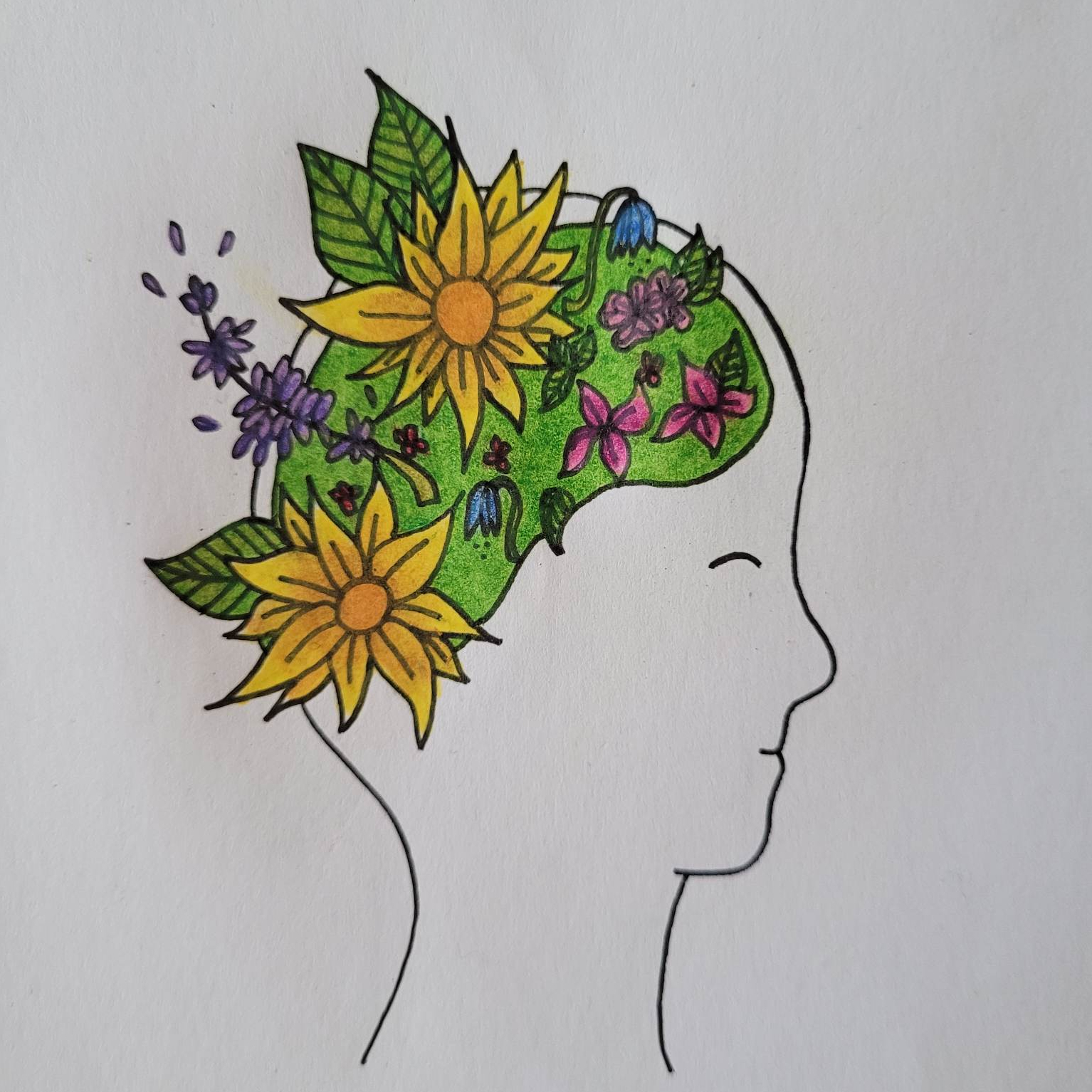
Monotropism is an autistic trait. The research article «Attention, monotropism and the diagnostic criteria for autism” by Murray, Lesser and Lawsen, argues that it could be central to understanding all autism traits. So, what exactly is it and how does it affect the way Autistic people think and process the world around them?
Monotropism has to do with attention. When Murray, Lesser and Lawsen explain that it could be central in the understanding of all autistic traits, it’s because “social interactions, the use of language, and the shifting of the object of attention are all tasks that require broadly distributed attention.”
Distributed attention, also known as polytropism, is the ability to have a natural focus on several things at the same time without getting too focused on one of them. A monotropic person on the other hand, will have a natural intense focus on one thing at the time. Both of these forms of attention have their advantages and disadvantages, but since our society values polytropism as the standard it can be challenging to function in the opposite way.
The Youtuber «I’m Autistic, Now What?” has a good way of describing what it feels like to have a monotropic attention. She explains that being polytropic is like walking into a room and seeing it in the light of a lamp in the ceiling that makes all the objects in the room clear. Being monotropic on the other hand is like walking into a room and seeing it in the thin, but sharp light of a torch. The things the person can see are clear and detailed, but it takes longer to see all the objects in the room.
This is something I recognize in myself. In an earlier blog post I described how I feel that I have to put a lot of effort into getting out of my own head and focus on my surroundings. Monotropism could explain why this happens. If I’m focused on my own thoughts (as I tend to), it will require a lot of effort to expand my attention to objects and people around me.
It’s difficult because I have to notice and process one thing at the time. I have to concentrate in order to shift my attention and put the details together in my mind so that they form a whole that I can understand. That’s why I often look a bit disoriented when I’m out among people. There’s so much information to take in like sounds, lights, smells, colors, shapes, patterns, voices, words, body language.
Social interaction is challenging when you’re monotropic because all the details in the interaction have to be interpreted separately and then put together so that one can try to understand. Due to this, normal tasks and activities such as going places, being social and doing different tasks during the same day require a lot of cognitive (sensory and thought) energy.
This is also the reason why I chose not to drive. It’s easy for me to fall into my monotropic focus on my thoughts and therefore lose focus on my surroundings. That’s why I don’t feel that driving is a safe activity for me. This is not to say that other Autistic people shouldn’t drive or can’t be good drivers, just that I with my high degree of monotropism am not suited for it.
Being focused on one thing over a longer period of time however requires less cognitive energy. For me that means activities like reading, listening, writing, drawing, games and music. If I spend several hours on one project I sometimes even experience gaining energy from it. It feels so right to be able to use my attention the way it is naturally. Polytropic people are also able to focus deeply on one thing at the time, but this requires concentration and effort. As a monotropic person it requires concentration and effort to not constantly be drawn into a deep focus.
Another aspect of monotropism is that it takes time to shift my attention from one activity to another. I personally experience my attention like a big train that is driving at full speed along a track. Suddenly it has to change tracks, but it’s difficult to use the breaks and get the “attention train” over to the other track. It’s challenging, exhausting and uncomfortable. I don’t get tired of activities I can spend a lot of time on, but when the activity is over and I have to do something else it feels like I have to readjust my whole world. That requires a lot of energy.
2. Hyperfocus

Hyperfocus is one of the abilities that comes with a monotropic brain. Many describe this ability as a kind of superpower. For my part I feel that sometimes it can be. I would feel a great loss if I no longer could use my hyperfocus. However, this doesn’t mean that it can’t be challenging. Whether hyperfocus is favorable or not will depend on the situation.
If one has a list of different tasks that require shifting attention many times then hyperfocus will feel like an obstacle, but if one has to work on a task over a longer period of time it will be beneficial. When I’m in hyperfocus I can’t sense anything but the thought or task I’m focused on. It’s an amazing feeling of both calmness and energy, but it’s not easy to take breaks from it. Therefore, I often forget to eat, drink and take breaks when I’m in hyperfocus. Those needs feel like annoying flies that ruin the flow of thought. Furthermore, being interrupted by others can feel both shocking and uncomfortable.
To explain how this can feel I’ll write about an example from my time in elementary school. The teacher was teaching the class about a topic. It was interesting and I got several ideas and thoughts about it while she was talking. I entered hyperfocus and lost awareness of the other students, the chair I was sitting on and even myself. Only the thoughts and ideas existed. Suddenly the teacher said my name. She had asked me a question and everyone was staring at me. My hyperfocus was so deep that I couldn’t manage to get it back to the “surface” in order to take in my surroundings, process the question, formulate an answer and activate my voice to say it out loud. It was too much for my brain and I got an autistic meltdown.
A meltdown is an involuntary intense reaction to overwhelming situations. It’s the result of stress that has built up over time and the situation that triggers the reaction is like the straw that broke the camel’s back. The way a meltdown looks can vary, but common characteristics are, as the Autistic author Chloé Hayden explains in her book “Different, Not Less”, screaming, crying and potential self-harming behavior. My meltdowns are a bit more subtle since they usually “just” involve breaking down and crying, but sometimes I end up stimming as well. A meltdown feels like the world is being torn down around you.
Classes can be challenging for Autistic people because they are structured in a way that is ideal for polytropic students. There are several different subjects during the day as well as classes that require shifting attention between listening, reflecting and actively participating. As and Autistic person I can do each of those, but not together. I can listen to the teacher or I can hold a presentation, but I can’t mix listening with answering sudden unprepared questions. The teachers interpreted this as shyness even though I never had any problems with the presentations that I could prepare for.
There is some advice that I’ve heard from other Autistic people that can be helpful in situations like these. If you are in hyperfocus somewhere communication with others can be expected, for instance at school or work, you can put a note or an item on the desk to show this to others. Then, if someone needs to speak to you, they can pass you a note so that you can read it and have the time to shift your attention at your own pace. This way uncomfortable reactions such as meltdowns can be avoided. I personally wear a golden headband to show others when I’m in hyperfocus.
However, hyperfocus also has its good sides. In the previously mentioned article, it says that monotropism leads to the task one is focused on to be performed well. This is clearly a strength. At university the other students got tired by long lectures on one topic with lots of information, whereas for me this was an ideal way to learn. Furthermore, having to write a Master’s Thesis was challenging, of course, but being able to do a deep dive into a topic of interest over a long period of time, was favorable for me. Hyperfocus makes you dedicated, committed and detail oriented.
The best you can do for yourself if you are monotropic and have hyperfocus is to be considerate of how to solve the challenges it brings as well as using the strengths in the best way possible. One hack I do is to gather polytropic tasks and activities on the same day when I plan them while gathering monotropic tasks and activities on another. This way I can prioritize rest after I have had a polytropic day and not have to interrupt my hyperfocus on my monotropic days.
An example of this is if I have a doctor’s appointment on Tuesday (which is a polytropic task because it requires communication), I will try to schedule other polytropic tasks and activities for the same day. These other activities can be meeting a friend for a coffee or going grocery shopping. I know that these activities require a lot of me, so then when I come home, I know to prioritize rest instead of starting on one of my monotropic tasks. Then, I can schedule my monotropic tasks (such as studying for an exam or writing a blog post) for Wednesday. That way I can avoid feeling overwhelmed by interrupting my hyperfocus to go grocery shopping or meet a friend.
Another tip I have is to use music to help the brain shift attention from one task to another. By attributing different types of music to different types of activities I feel that I can help myself to switch tasks. When I finish an activity or task, I turn off the accompanying music. I then switch to the type of music for the next activity or task I’m going to start. This makes the transitions less stressful and more positive.
If you get distracted by listening to music during an activity an option could be to use music only during the transition. For instance, it’s not very practical to listen to music while being social, but you can listen to music to help shift your attention before meeting others.
3. Special interests
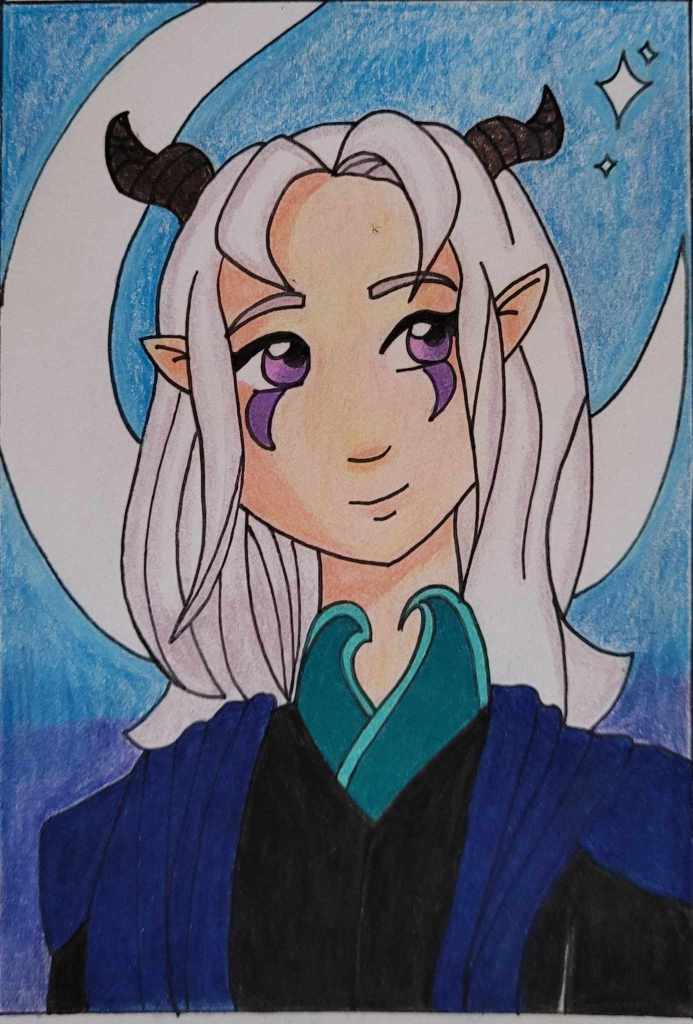
(This illustration of Rayla from the series The Dragon Prince is inspired by elentori-art on tumblr).
A special interest isn’t an interest in something special, but rather an intense interest and passion for a topic. It can be anything: a sport, a band, math, philosophy, sharks, trains, history etc. Perhaps it would be more precise to call it a monotropic interest because it stems from monotropic attention. These interests are few, but intense. According to the article I mentioned before Autistic people have a tendency to either be very passionate about something or not interested at all. However, it is also possible to be Autistic and not have any special interests.
I personally experience having special interests as something positive. This is my biggest source of energy, joy and motivation. I feel sorry for those who don’t have deep interests because they are missing out on this joy. My special interests are fantasy, Latin-America and autism. Discovering a new special interest is a unique experience. It’s like a spark that ignites when hearing about a topic. Then, suddenly it’s like everything related to the topic is in color while the rest of the world is grey.
Many neurotypical people view special interests as something negative for instance because it can come in the way of learning other things. To that I can say that there are ways to solve this. The important thing is to work with our autistic neurotype instead of against it. In this case it means to not suppress or limit a person’s special interest/s in favor of other topics, but rather to try to build bridges from the special interest/s to other topics.
An example of this is a student who has a special interest in space. He doesn’t see the point of drawing a t-shirt design for art class, so how can he be motivated? A possible solution could be by building a bridge between space and art by asking him if he wants to make a space inspired design with planets, stars and galaxies.
I ended up building interest bridges in order to motivate myself at school. I built interest bridges from my Latin-America interest to the subjects Spanish, history, geography and social science. Then I built interest bridges from fantasy to art, music, natural science and geology (the first two because I could draw fantasy characters and because music felt magical, and the second two because many magical powers in fantasy are based on nature).
Naturally it isn’t possible to find a connection between everything, but in those cases I motivated myself by thinking that I could read something I was interested in when I was done with my math homework and other subjects that I found uninteresting. A special interest can actually evolve into a job. Many fields are good for specialists (as Autistic people tend to be). Some examples are IT, art, music, economics and drama. There isn’t any reason to try to limit these interests and hyperfocus which is something wonderful for an Autistic person.
When it comes to the social aspect a special interest doesn’t need to be limiting either. I also build bridges to other people via their interests. Since I know how much my own special interests mean to me, I can understand that their interests (even if they’re not special interests) are also important to them. In the cases where you have a common interest with someone it’s rather perfect!
To sum it up I can say that monotropism is my greatest challenge, but also my greatest strength and source of joy. I wouldn’t change it for anything! I hope that there can be more focus on the strengths that come with different autistic traits and on techniques such as building bridges from special interests to other topics. This way we can work with our neurotype instead of against it when something is challenging.
 Autism Diversity
Leave a comment